
Criminal Cases in the Howard County Courts
Howard County criminal court cases are divided by offense level. Felonies go to the 118th Judicial District Court. The District Clerk keeps those files at 312 Scurry Street in Big Spring. Class A and B misdemeanor case ownership should be confirmed with the Howard County Clerk at the county courthouse. The clerk's broad online referral to DPS concerns criminal-history searches, while a filed county-court case remains a court record. Big Spring Municipal Court keeps Class C, traffic, ordinance, and environmental matters. Justice courts also hear Class C matters and issue warrants or capiases.
That split matters because no single Howard County clerk holds every criminal docket. A cause number identifies a case within its court, not a countywide history. Ask which court is shown on the charging paper or bond record before ordering a search. The clerk is the custodian of the filed docket, motions, judgment, and sentence. Police reports and jail bookings remain with the agencies that created them.
Howard County Court Search Fee
The local felony route has a firm point of contact. The Howard County District Clerk charges $5 per name for civil, family, and criminal searches. Payment is due before the search and must be cash or money order. Debit and credit cards are not accepted for this service. Call 432-264-2223 before mailing payment or visiting, especially when a name has several spellings or the cause year is uncertain.
The District Clerk's official page documents both the charge and the online limit shown here.
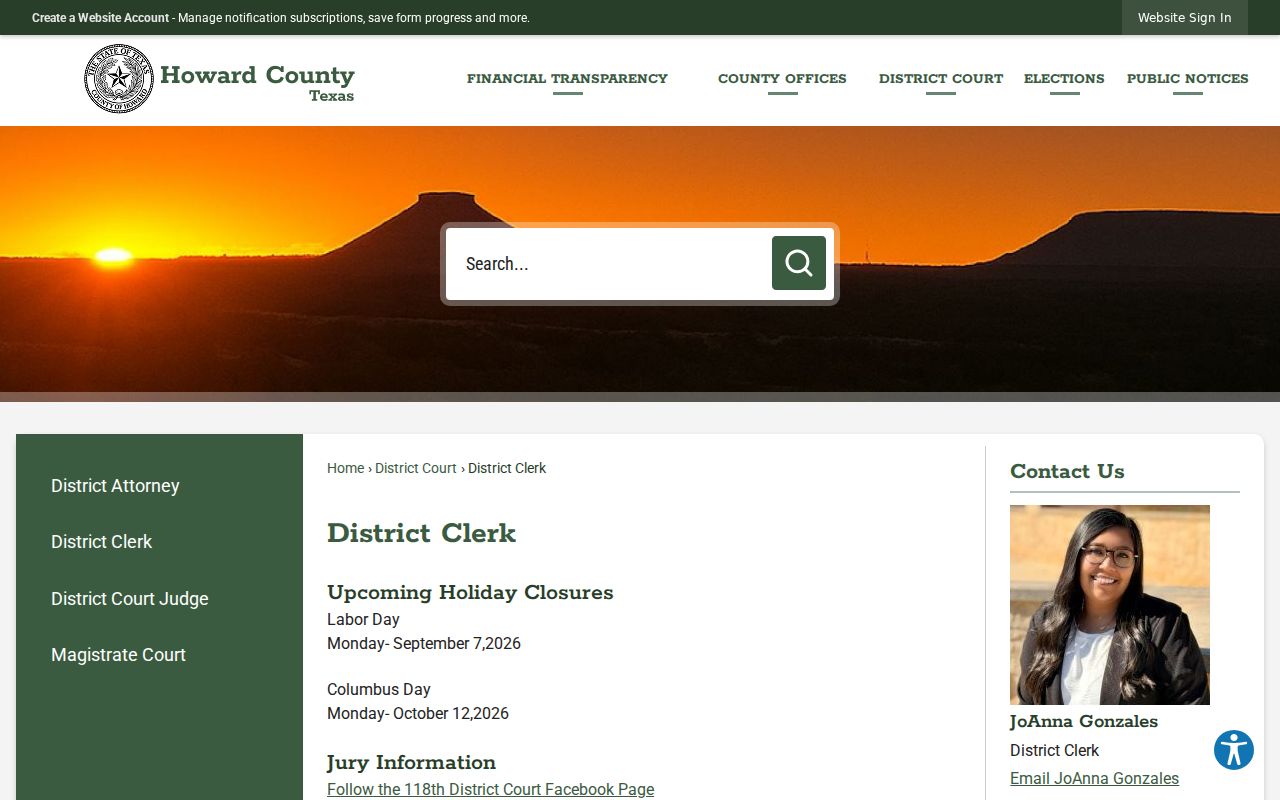
The image reinforces why a direct clerk request is central to a Howard County felony case search. Ask for a docket sheet first. It can identify which filed documents are worth copying and whether a certified judgment is actually needed. Copy and certification charges were not posted in the research, so request a quote rather than assuming the $5 name-search fee covers documents.
How to Search Case Records
Start with the offense level and court. Howard County's general public portal expressly excludes criminal matters, while re:SearchTX may offer statewide e-file access that varies by court and document. A missing online result is not proof that no local case exists. Use the following channel order.
- Identify the likely court from the charge level, citation, bond paper, or known cause number.
- Call the District Clerk for felony records, the County Clerk for county-level misdemeanors, or the municipal or justice court for fine-only matters.
- Give the full name, spelling variants, cause number, and filing year if known. Pay the stated search fee through the method the clerk accepts.
- Check re:SearchTX as a supplement, then read the docket status and event dates in context.
- Order the docket, filed charge, disposition, judgment, or certified copy needed from the record-holding clerk.
| Field Label | Type | Required | Notes |
|---|---|---|---|
| Party name | Text | Search dependent | Use full legal spelling and compare identifiers. |
| Cause number | Text | Alternative | The safest match when known. |
| Court | Filter | Portal dependent | Select the local trial court shown on the case. |
| Filing date | Date | Optional | Narrows common-name results. |
| Case type or status | Filter | Optional | Availability differs by court. |
Howard County has not published a help page that promises all of those filters for its criminal records. Treat them as the common re:SearchTX case fields to check, then rely on the cause number and clerk confirmation for identity and completeness.
Howard County Court Portal Limits
The official re:SearchTX interface is a useful second check, not a guaranteed Howard County criminal index. Availability and document prices vary by the participating court. Search results can expose a case index or e-filed document, yet the local clerk remains the source for a complete or certified Howard County court record.
The statewide access screen shows the supplemental route readers may test.
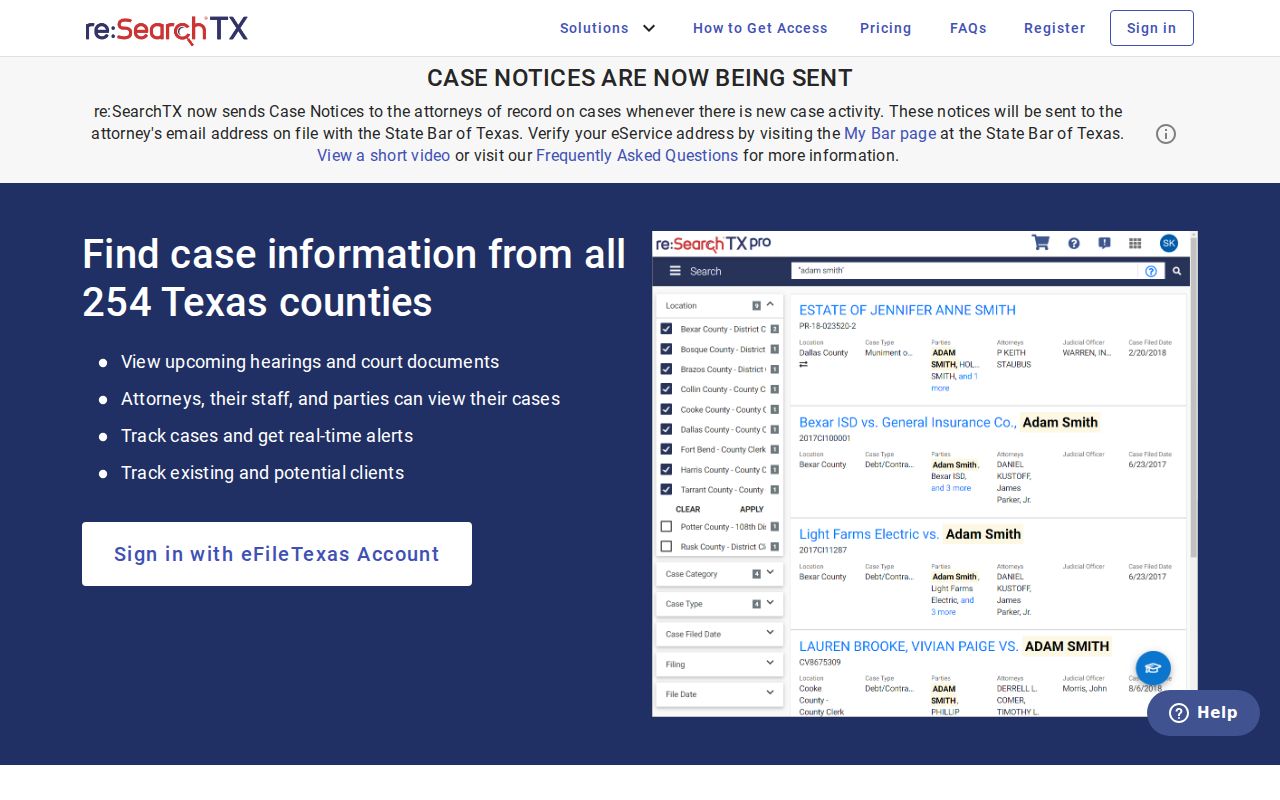
This portal should never replace a call to the District Clerk when the local public portal says criminal cases are excluded. It also should not be confused with the DPS Criminal History Conviction Name Search. DPS compiles reported conviction and deferred-adjudication history. A clerk file instead shows what was filed, heard, and decided in a specific court.
Note: An absent online Howard County case can still exist in the clerk's local file or paper index.
What the Case File Shows
A Howard County criminal case file answers what prosecutors charged and how the court handled that charge. It can be more precise than the short label first entered at booking. Read the docket in date order, then confirm the final result in the signed judgment or dismissal rather than inferring an outcome from one setting.
| Cause Number & Court | Identifies the specific case and the Howard County court holding it. |
|---|---|
| Charging Document | Shows the complaint, information, or indictment and the filed offense degree. |
| Docket Entries | Chronological record of filings, settings, motions, pleas, and rulings. |
| Hearing Dates | Lists scheduled or completed court events, subject to later changes. |
| Disposition & Judgment | Records dismissal, acquittal, conviction, deferred adjudication, or another outcome. |
| Sentence & Conditions | States punishment, costs, and court-ordered terms when applicable. |
Public copies may redact birth dates, Social Security numbers, victim details, information about minors, and sealed documents. A docket entry for a plea does not replace the judgment. Likewise, a dismissal closes a charge but does not by itself erase every arrest or booking record tied to it.
Howard County Criminal Docket Terms
Short docket labels carry specific meanings. A complaint is a sworn allegation. An information is a prosecutor-filed charge often used for a misdemeanor, while an indictment is a grand jury's felony true bill. Arraignment is the proceeding where the charge is formally presented and a plea is taken. Disposition means the result of the charge, not merely the last hearing shown.
Watch for motions to revoke or adjudicate. They concern alleged violations during community supervision and may produce a capias, hearing, and later ruling. A "dismissed" entry means the filed charge ended without conviction, but dismissal alone is not a Texas expunction order. For any abbreviated entry, ask the Howard County clerk for the filed document behind it rather than guessing from the docket label.
Howard County Court Case Counters
The county courthouse can cause a wrong-counter trip. Big Spring Municipal Court sits on its third floor, but felony court files are kept at the separate district-court building on Scurry Street. The municipal court page confirms its Class C and city-jurisdiction contact route.
This official view represents the municipal record counter, not a felony search portal.

The Howard County Clerk occupies Room 104 in the same courthouse. Its official county-clerk page provides the county-level contact and refers broad criminal-history searches to DPS.
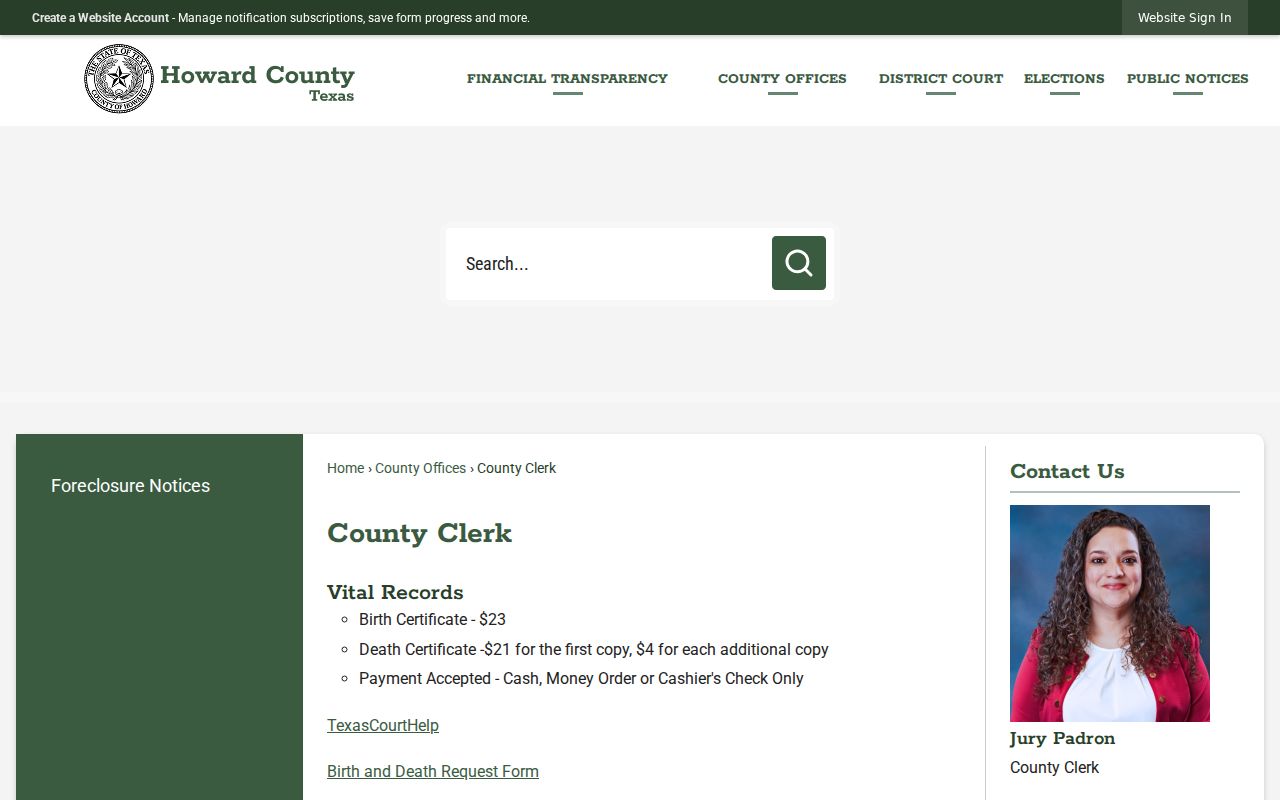
The two images show distinct offices and record slices. Call 432-264-2530 for Big Spring municipal matters and 432-264-2213 to clarify a county-level misdemeanor file. JP contacts are 432-264-2226, 432-264-2228, and 432-394-4000 for their respective precinct matters.
Stages of a Criminal Case
A Howard County court file grows after the prosecutor decides what to file. Felony prosecution usually proceeds through indictment unless indictment is lawfully waived. A misdemeanor commonly begins with a complaint or information. Arraignment places the charge before the accused and records a plea. Pretrial motions and settings follow. The case may end by dismissal, negotiated plea, or trial, followed when applicable by judgment and sentence. An appeal from the district court may proceed to the Eleventh Court of Appeals.
Case flow: Charges Filed › Arraignment › Pretrial › Plea or Trial › Disposition › Sentencing
- Disposition
- The outcome of a charge or case.
- Indictment
- A grand jury's written true bill alleging a felony.
- Information
- A prosecutor-filed charging instrument often used for misdemeanors.
- Capias
- A court command to take a named person into custody.
Howard County Court Documents
Request the record that answers the question. A docket sheet is the best first purchase when the case path is unclear. It lists events and points to the filed charge, plea, dismissal, judgment, or sentence. A certified judgment is more formal because the clerk attests to the copy. It may be useful for correcting one's own reported history or documenting the exact disposition, but it costs more than an ordinary copy in many courts. Howard County's researched sources did not state those copy rates, so ask the clerk.
Federal cases use a different system. Howard County lies in the Western District of Texas, and official federal dockets are accessed through PACER. PACER registration and its current fee schedule apply.
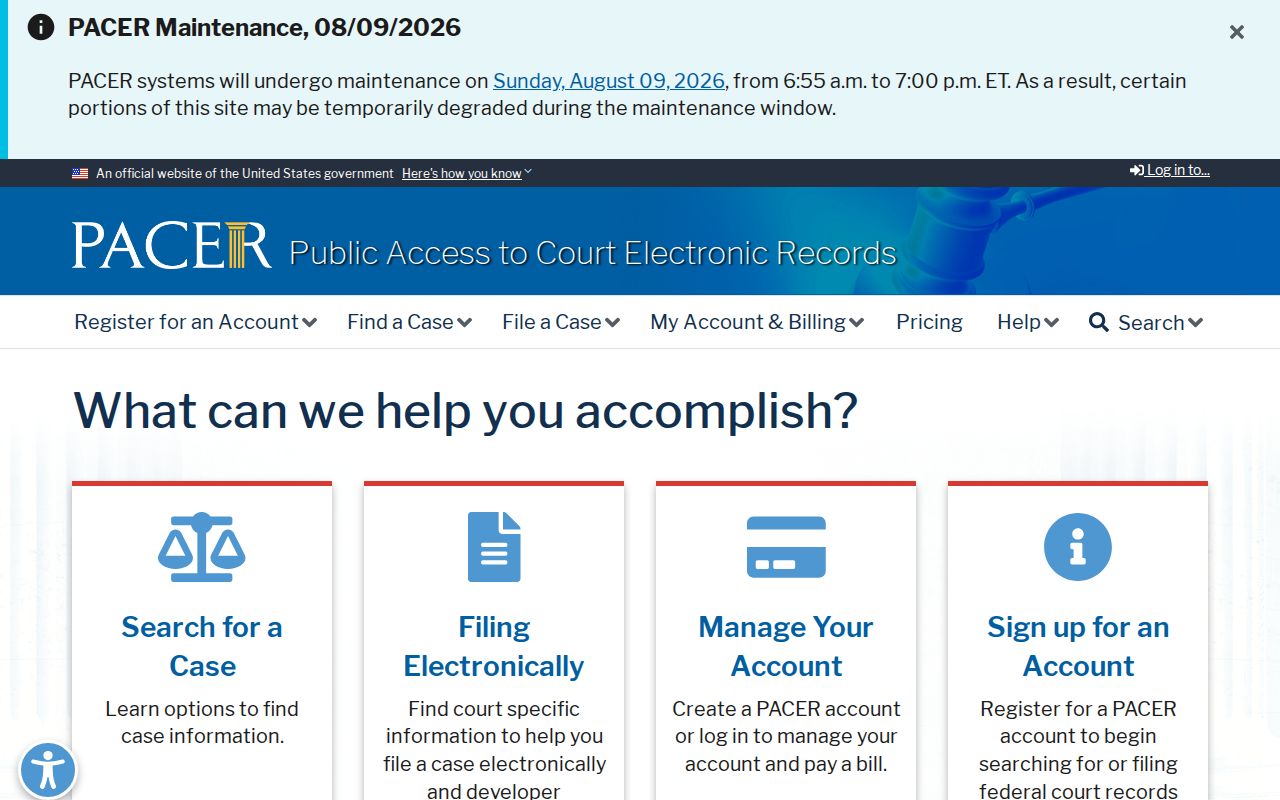
The federal image marks a separate court layer. It does not substitute for records held by the 118th District Clerk, County Clerk, municipal court, or Howard County justice courts.
Access & Restrictions
Many Howard County criminal court records are open, but access is not unlimited. Juvenile court, prosecutor, and probation files are generally restricted under Texas Family Code Section 58.007. Courts also protect Social Security numbers, financial data, medical facts, victim information in protected categories, and sealed material. An expunction order can require removal or destruction of qualifying arrest records. An order of nondisclosure limits ordinary public release without destroying every record.
The Texas Public Information Act is useful for police reports and other executive-agency records. Filed pleadings and judgments, however, should be requested from the court clerk under court-access rules. If an online index shows nothing, give the clerk the full name, likely year, offense level, and any booking or cause number. For the broader path from a booking into court, consult the Howard County arrest history record route.